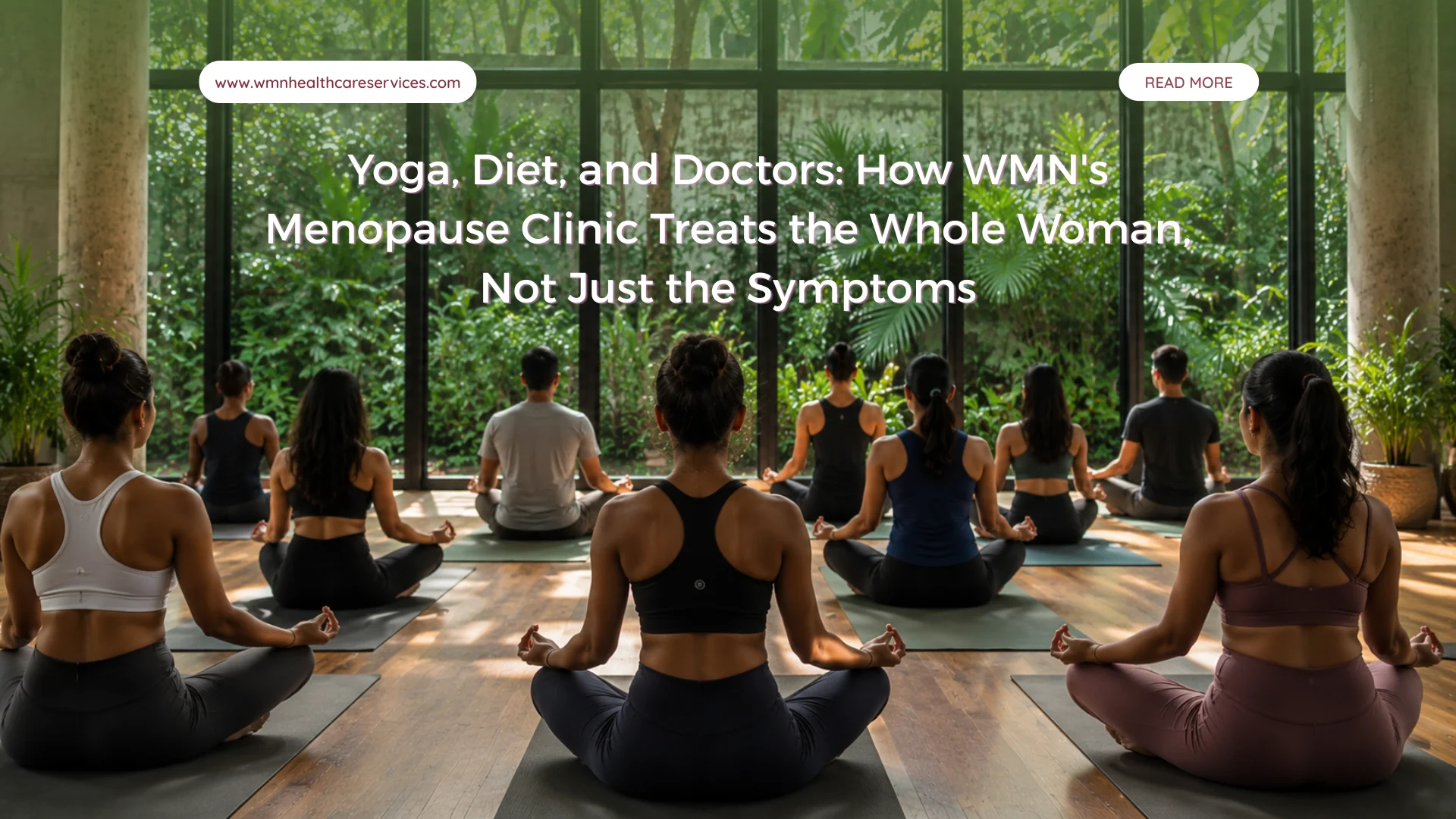
Yoga, Diet, and Doctors: How WMN’s Menopause Clinic Treats the Whole Woman, Not Just the Symptoms
Menopause gets talked about in fragments. A hot flash here, a mood swing there, a doctor’s note about hormone levels. What rarely gets talked about is the fact that menopause isn’t a single symptom to fix — it’s a transition that touches a woman’s body, mind, and daily life all at once. Treating it like a checklist of symptoms to medicate is where most menopause care stops short.
At WMN Doctors, the Menopause Clinic is built around a different idea: that this phase deserves a team, not just a prescription.
More Than One Doctor in the Room
Walk into WMN’s Menopause Clinic and you’re not just meeting a gynecologist. You’re being looped into a team that includes therapists, dieticians, counselors, and specially trained yoga therapists — all working together on one case, yours.
That matters because menopause rarely shows up as one clean symptom. A woman might come in for hot flashes and leave the conversation realizing she also needs to talk about sleep, anxiety, weight changes, or bone health. A single-specialist visit tends to treat whichever symptom is loudest that day. A multidisciplinary team is built to catch the rest.
Where Yoga Fits In
It would be easy to treat yoga as a nice-to-have add-on to “real” medical care. WMN treats it as a core part of the management plan. Their specially trained yoga therapists work alongside the medical team to help ease women through the transition — not as a substitute for medical guidance, but as a lifestyle intervention that works in tandem with it.
This matters because menopause isn’t only a hormonal event — it’s a lifestyle one too. Sleep patterns shift, energy dips, stress responses change. Yoga, guided by therapists trained specifically for this stage of life, gives women a tool they can use daily, not just something they hear about once during a consultation and forget.
Diet as Medicine, Not an Afterthought
Menopause changes how the body processes food — metabolism slows, bone density drops, and weight can shift in ways that feel unfamiliar and frustrating. WMN’s dieticians are part of the same care team from day one, not a referral handed out after the fact. That means nutrition guidance is built around the specific hormonal and physical changes happening in that woman’s body, not a generic diet plan pulled off a shelf.
Emotional Support, Built In
The psychological side of menopause is often the most under-treated part of the whole experience. Mood swings, anxiety, irritability, and a sense of losing control over your own body are common — and common doesn’t mean they should be brushed aside. WMN’s counselors are part of the standard care team, meaning emotional wellbeing isn’t treated as separate from physical health. It’s addressed in the same room, by people trained to do exactly that.
Why the Team Approach Actually Matters
The real difference between a single-specialist visit and WMN’s model isn’t just “more people involved.” It’s coordination. A gynecologist, dietician, yoga therapist, and counselor working from the same case file means nothing falls through the cracks between appointments. A woman doesn’t have to explain her situation five separate times to five separate people who never talk to each other.
Menopause is not a problem to be silenced with a prescription and sent home. It’s a phase that deserves the same layered, coordinated care that any major life transition does. At WMN Doctors, that’s exactly the model — doctors, dieticians, yoga therapists, and counselors, working as one team, for one woman, through one of the most misunderstood chapters of her health.
If you’re navigating this transition and want care that looks at the whole picture — not just the symptoms — WMN’s Menopause Clinic is built for exactly that conversation.


